
Index Funds for Beginners: The Easiest Way to Invest in the Stock Market
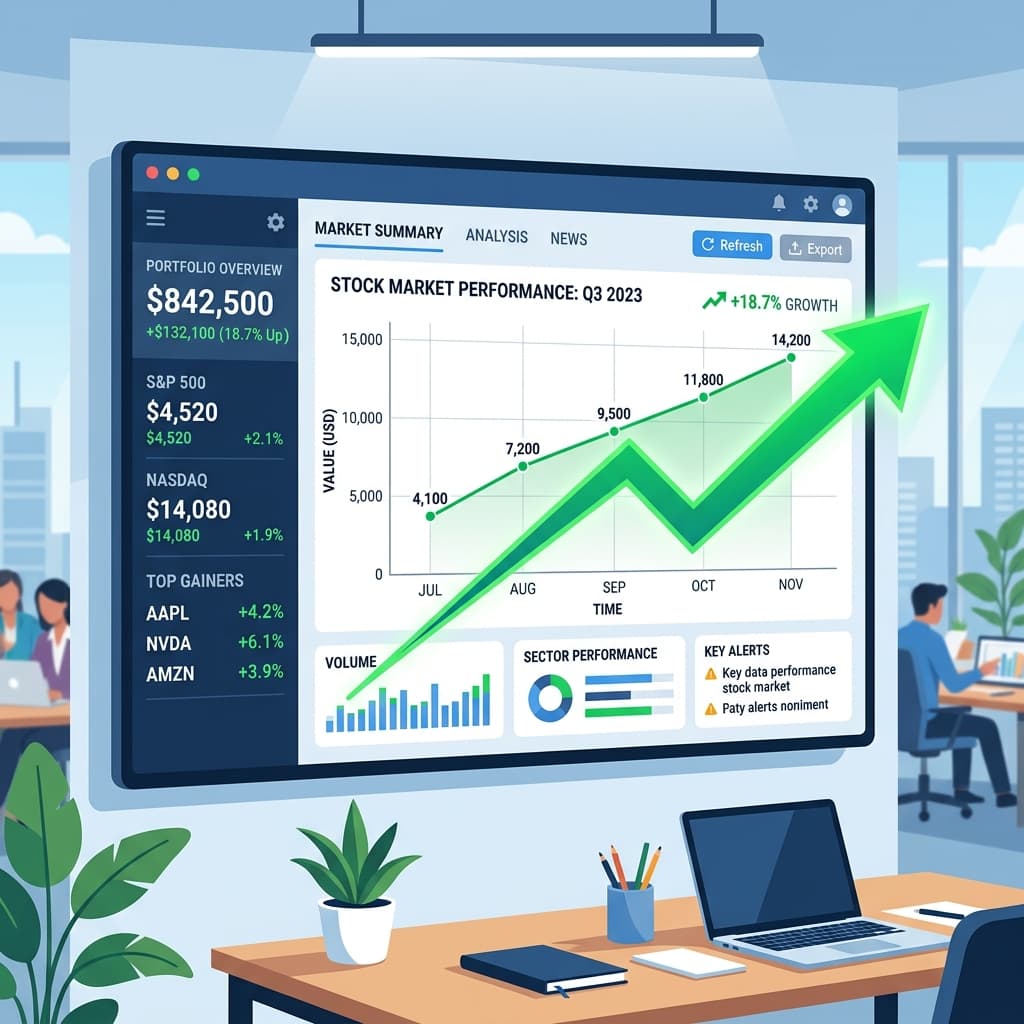
If you've ever wanted to invest in the stock market but felt overwhelmed by the thousands of individual stocks, you're not alone. Figuring out which company will grow, analyzing balance sheets, and keeping up with daily financial news is a full-time job.
That's where Index Funds come in.
Warren Buffett, one of the greatest investors of all time, has repeatedly advised that for the average investor, a low-cost index fund is the single best investment they can make. Instead of trying to beat the market, index funds allow you to own the market.
Let's break down how index funds work, why they outperform most professional fund managers, and how you can start investing in them.
---
Active vs. Passive Investing Comparison
Understanding the difference between active and passive mutual funds is key to choosing where to put your money:
| Parameter | Active Mutual Funds | Index Funds (Passive) |
|---|---|---|
| Investment Goal | Beat the market index | Mimic the market index |
| Fund Manager Role | Actively buys and sells stocks | Automatically replicates index weightage |
| Expense Ratio (Fees) | High (usually 1.0% to 2.5%) | Very Low (usually 0.05% to 0.3%) |
| Human Error Risk | Yes (Manager can make bad calls) | No (Purely algorithm-driven) |
| Performance | Often underperforms index long-term | Matches the index performance |
---
What is an Index Fund?
To understand index funds, you first need to understand what a stock market Index is.
An index is a basket of stocks that represents a specific market or sector. For example: Nifty 50 (India): Tracks the 50 largest companies listed on the National Stock Exchange (NSE), representing the health of the Indian economy. S&P 500 (USA): Tracks the 500 largest publicly traded companies in the United States, including giants like Apple, Microsoft, and Amazon.
An Index Fund is a mutual fund that buys all the stocks in a specific index in the exact same proportion. If Reliance Industries makes up 10% of the Nifty 50 index, the Nifty 50 Index Fund will allocate 10% of its money to Reliance stock.
Because the fund simply copies the index, there is no need for highly paid research analysts or active management. This process is called passive investing.
---
The Power of Low Fees: Understanding Expense Ratio
The biggest superpower of index funds is their low cost.
Mutual funds charge a fee called the Expense Ratio to cover their operational costs, expressed as a percentage of your investment. Active Funds: Charge 1.5% to 2% annually because of research costs, management salaries, and marketing. Index Funds: Charge 0.1% to 0.2% because the process is automated.
The long-term impact of 1.5% fees:
Suppose you invest ₹10,000 every month for 30 years, assuming a 12% average annual return. With an Index Fund (0.1% fee): Your final portfolio is worth approximately ₹3.3 Crores. With an Active Fund (1.6% fee): Your final portfolio is worth approximately ₹2.5 Crores.You lost ₹80 Lakhs just in management fees! This is why keeping your investment costs low is one of the most reliable ways to build wealth.
---
How to Choose an Index Fund
When comparing different index funds tracking the same index, look at these two critical metrics:
1. Expense Ratio
Select the fund with the lowest expense ratio. The lower the fee, the more money stays in your account compounding over time.2. Tracking Error
Since index funds aim to copy an index exactly, they shouldn't deviate from the actual index return. Tracking Error measures this deviation. A smaller tracking error (closer to zero) means the fund manager is doing a highly efficient job of matching the index.---
Frequently Asked Questions (FAQs)
#### Can I lose money in an index fund? Yes. Index funds invest in real stocks, meaning they are subject to market volatility. If the overall stock market crashes, your index fund value will drop as well. However, because you are diversified across 50 or 500 top companies, the risk of your investment going to zero is practically non-existent.
#### How do I start investing in index funds? You can invest in index funds through any registered mutual fund platform, stock broker, or directly via the asset management company (AMC) website. You can set up a monthly Systematic Investment Plan (SIP) starting with as little as ₹500.
#### Are index funds and ETFs the same thing? They are very similar, but have different trading mechanisms. Index funds are bought and sold at the end of the day at a fixed Net Asset Value (NAV). ETFs (Exchange Traded Funds) are traded on the stock exchange throughout the day like individual stocks, requiring a demat account to trade.
---